

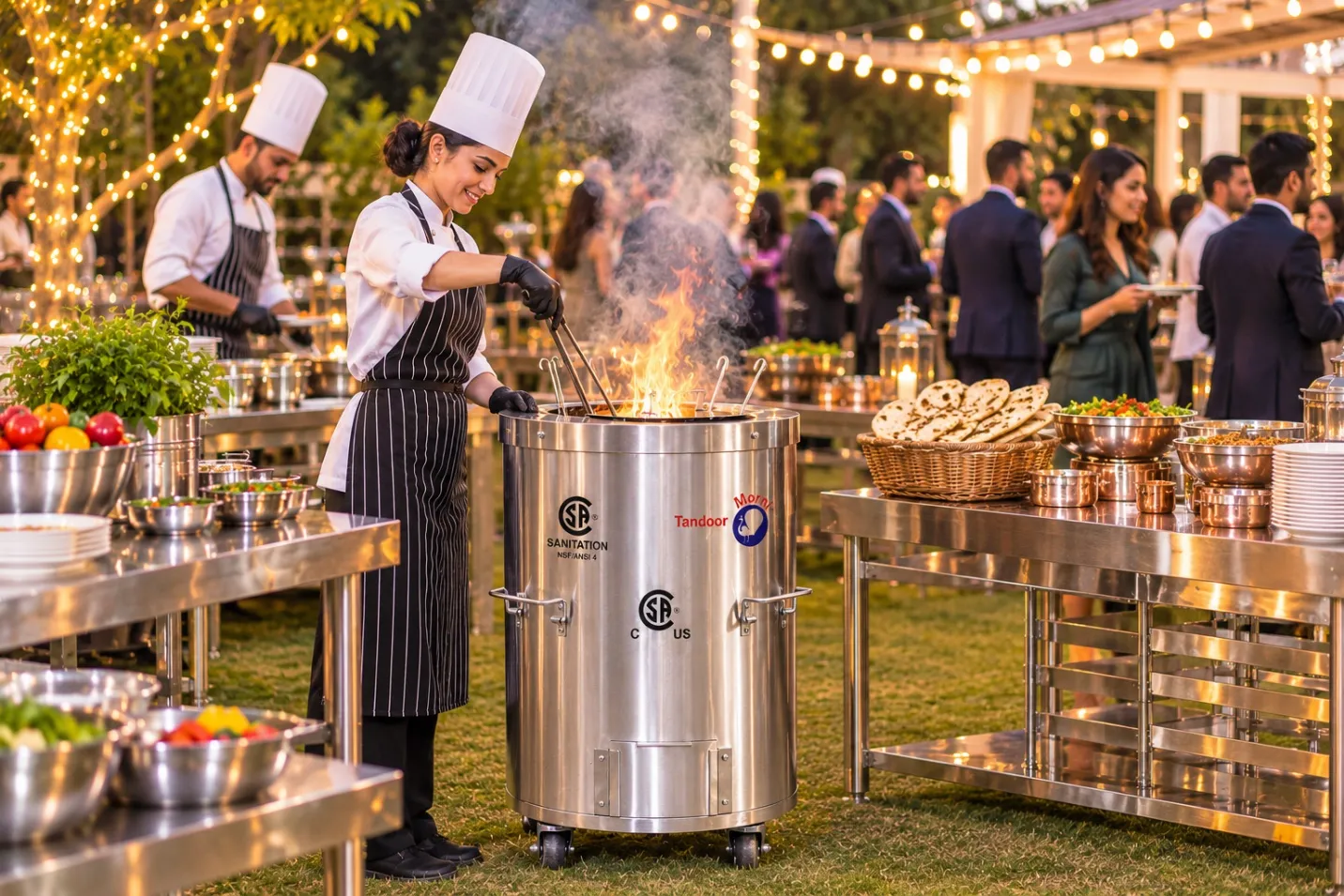
Outdoor catering tandoor oven
A beautifully cooked kebab depends on more than a flavorful marinade or the perfect combination of spices. The skewer holding the ingredients also influences how food is positioned, handled, and cooked. In traditional clay oven preparation, tandoor skewers are placed inside a deep cooking chamber where intense heat surrounds the ingredients. Choosing poorly matched tandoor oven accessories can make handling difficult and may cause food to slip or cook unevenly. Understanding the differences between available Tandoor Skewers helps home cooks and restaurant chefs select tools suited to specific dishes and cooking environments.
Why Skewer Shape Matters
Tandoor skewers come in several shapes, and each design serves a practical purpose. Flat tandoor skewers are especially useful when preparing seekh kebabs made with seasoned minced meat. The wider surface gives the mixture more support and reduces unwanted spinning during handling.
Round tandoor skewers can work well for certain cubed meats, vegetables, and other firm ingredients. However, food may rotate more easily on a smooth round surface. The ideal choice depends on how ingredients are cut, their texture, and how securely they remain attached during cooking.
In practice, many cooks keep both styles on hand. This allows them to switch between minced meat and firmer ingredients without compromising on handling or presentation.
Select the Appropriate Skewer Length
Skewer length should correspond to the oven’s internal dimensions and approved support arrangement. Equipment designed for a large restaurant tandoor oven may be unsuitable for a smaller home tandoor oven. Excessively long skewers can also create handling difficulties around crowded cooking areas.
Before purchasing, cooks should check the tandoor oven opening, chamber depth, and recommended placement method. Enough usable length is needed to support the ingredients in a clay oven while keeping the handling end accessible. Following the manufacturer’s specifications is safer than selecting a skewer based on appearance alone.
If you are unsure, measure the tandoor oven opening and chamber depth first, then compare those numbers with the skewer dimensions listed by the seller. A few minutes of measuring can prevent an unsuitable purchase.
Understand the Importance of Material
Material quality affects durability, cleaning, and performance during repeated cooking sessions. Many cooks prefer stainless steel tandoor skewers because suitable food-grade varieties resist corrosion and can be cleaned thoroughly after use. However, thickness and construction quality also matter.
Thin tandoor skewers may bend under heavy ingredients, while overly bulky designs can be inconvenient for careful preparations. Choosing sturdy, food-contact-safe equipment helps maintain control. Buyers should inspect finishing details, including sharp edges or rough surfaces that might complicate cleaning and handling.
Handle design deserves attention too. A comfortable, secure grip helps you lift loaded skewers more steadily, especially when the portions are heavy.
Match Skewers to Food Types
Different ingredients require different levels of support. Seekh kebabs need a skewer that helps the minced mixture maintain its shape. Boneless chicken pieces are comparatively firm but should still be threaded carefully so they remain secure during cooking.
Paneer, mushrooms, bell peppers, and onions require a gentler approach because they can split or slide when pierced incorrectly. Cutting ingredients into reasonably consistent pieces helps improve preparation. Avoiding excessive crowding also allows the heated air and radiant heat of a clay oven to reach exposed surfaces.
Marinating also affects how food behaves on the skewer. Ingredients that have rested properly usually hold their flavor well, while very wet pieces may slide. Pat them lightly if the marinade is too loose.
Prepare Ingredients Before Threading
Even the best skewer cannot compensate for poorly prepared ingredients. Meat should be cut into suitable pieces, while marinades should be balanced so they coat the food without leaving excessive liquid. Very wet minced mixtures may struggle to hold their shape.
For vegetable preparations, selecting pieces with similar cooking requirements makes handling easier. Ingredients that cook at dramatically different rates may be better prepared on separate skewers. This approach offers greater control and avoids removing an entire skewer when only one component is ready.
Leave a small gap at the handle end and a little space between pieces. This simple habit makes lifting easier and lets heat reach each piece more evenly.
Avoid Common Skewering Mistakes
One frequent mistake is loading too much food onto a single skewer. Heavy portions can make lifting difficult and increase the chance of ingredients slipping. Overcrowding may also interfere with cooking consistency, particularly when pieces are pressed tightly together.
Another problem is using the same skewer style for every dish without considering texture. A flat design suited to minced meat may not be ideal for every vegetable preparation. Testing smaller batches helps cooks identify arrangements that work well before preparing larger quantities.
Rushing is another common problem. Taking a little extra time to thread each piece neatly usually leads to better results than hurrying through a large batch.
Handle and Clean Skewers Safely
Metal skewers can become extremely hot during tandoor cooking in a clay oven. They should be handled with appropriate heat-resistant tandoor oven accessories and placed on designated heat-safe surfaces after removal. Cooks should never assume the exposed handle remains cool.
Cleaning should begin once the equipment has cooled sufficiently. Food residue should be removed using suitable cleaning methods, followed by thorough drying and proper storage. Regular inspection is useful because bent, damaged, or corroded skewers may become increasingly difficult to handle safely.
Store tandoor skewers flat or upright in a dry place where they will not bend or tangle. Good storage protects the shape of each skewer and keeps them ready for the next session.
Build a More Efficient Workflow
Restaurants preparing several kebab varieties can organize skewers by dish type, portion size, or cooking requirements. This makes preparation more predictable and helps staff avoid mixing raw ingredients with ready-to-serve food.
Home cooks can adopt the same principle on a smaller scale. Preparing ingredients beforehand, keeping suitable tandoor oven accessories nearby, and arranging a safe resting area for hot equipment make outdoor cooking more enjoyable and less rushed. This habit works equally well beside a clay oven or any other tandoor setup.
Whatever the setting, consistency is the goal. Using the same preparation steps each time makes results easier to repeat and problems easier to spot.
Think About Quantity and Budget
Consider how many skewers you actually need. A home cook serving a small family may be comfortable with a modest set, while a restaurant will need enough to keep service moving without delays.
Price should be weighed against quality. Very cheap options may bend or wear quickly, so a slightly higher investment in sturdy tandoor skewers is often the more practical choice. Budgeting for tandoor oven accessories alongside the skewers keeps the overall setup balanced.
Conclusion
Choosing suitable skewers involves considering shape, length, material, and the foods being prepared. The right tandoor oven accessories support secure handling, better organization, and greater confidence during high-temperature cooking. Proper ingredient preparation and safe cleaning practices further improve the overall experience. Whether preparing traditional seekh kebabs or experimenting with colorful vegetable combinations, attention to these details makes a meaningful difference. Tandoor Morni offers skewer options worth considering when equipping a compatible tandoor oven for home or professional cooking.